How to Be Visible Online as a Professional Without Falling Into the Marketing Trap
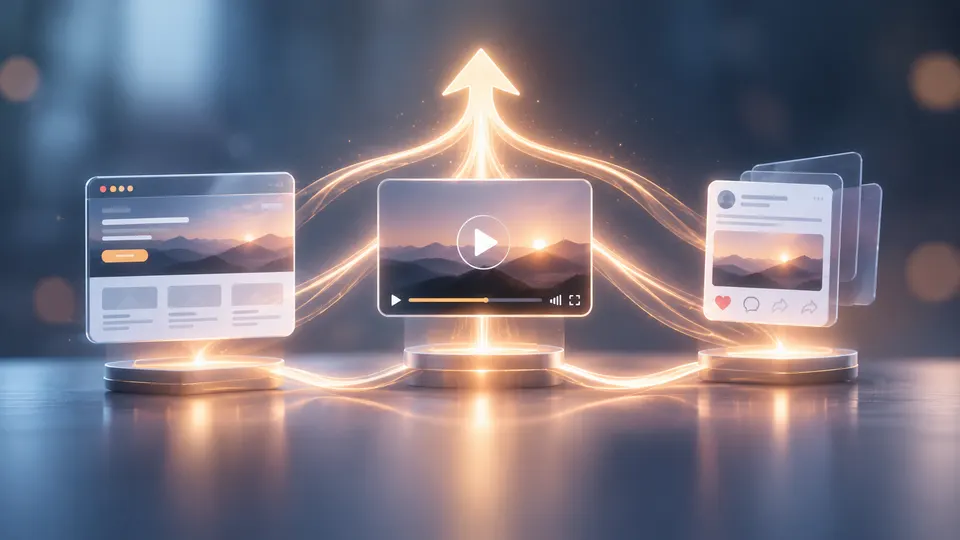
Instead of an exhausting battle with social media, simply connect the core building blocks: a well-structured website, a strong introductory video, and a measured presence in practice.
· updated · 5 min read
Imagine Adéla. She is a great Spanish tutor. She has years of experience, her students make rapid progress, and her lessons are both fun and effective. Yet, if you look at her website (assuming she even has one), you will find a classic digital business card from 2015: „My name is Adéla Nováková, I graduated in philology from Charles University, and I offer individual and group lessons for all levels...“ She posts on social media once a quarter when she happens to remember, and the mere thought of filming videos triggers mild panic.
Do you recognize yourself in this a little? Whether you teach languages, manage accounting, practice therapy, or design gardens, you likely face the exact same dilemma: you want to do your job and have enough clients, but you don't want to spend your evenings brainstorming posts, tweaking templates, and dealing with endless Windows updates.
The good news is, you don't have to. An effective online presence isn't about being everywhere and shouting the loudest. It is about smartly connecting the essential elements so they work for you even while you are teaching or asleep.
1. Website: Your Home Base That Must Speak About the Client, Not About You
The biggest mistake most professional websites make is functioning like a boring resume. In reality, visitors don't care where you studied or how many certificates you hold—those are merely secondary proof points. A client cares about one thing only: can you solve my problem?
For your website to act as a reliable filter and bring in the right people, it needs a clean structure:
- Establishing the most human connection possible: The visitor must immediately connect with you and start perceiving you as someone who understands them. Ideally in the form of a direct video. But feel free to start with text to organize your thoughts. You can add the video later. No "My name is blahblah, I studied here and there, like a seventh-grade essay." Nobody cares about that now. Instead, keep in mind that your client is looking for a change in their current situation, and focus on the following:
- Naming the problem: Describe the situation your clients are seeking a way out of (aching back, fear of speaking a foreign language, lack of interesting gastronomic opportunities in the area...).
- You as the path to a solution: Introduce yourself and show how exactly your approach works, why it works, or what your personal journey to the position you are in now looked like.
- Proof over promises: Provide testimonials from real people who have already gone through your course or practice.
- A clear next step: A website must not trail off into nothingness. At the end, there must be an easy option to book an initial consultation or reserve a slot in your calendar.
2. Introductory Video on Your Website: Your Strongest Moment of Truth
Once your website is built, it is immensely helpful to put the most important element onto it—yourself.
Forget lengthy texts. When a potential client lands on your site today, they want to quickly feel who they are dealing with. Show yourself as a flesh-and-blood human being. Aside from building a much stronger connection, you also provide valuable material for modern search engines, which increasingly draw from YouTube content.
You can film an introductory video yourself on your phone (more on that in the next post here). An alternative option is a friendly online interview. That format is completely unbeatable. It requires zero prep work on your part, and having someone ask you questions naturally places you in a position of authority. You don't have to script anything in advance or struggle with a camera—at publishere.com, we conduct this interview with you and professionally edit it so it fits seamlessly onto your homepage—and at a very reasonable price.
A video's effectiveness increases significantly when it follows a clear structure:
- Clear Video Structure:
- Naming the client's problem (I know what you are struggling with—for example, the fear of speaking a foreign language).
- Personal introduction and context (who I am, why I enjoy what I do, what obstacles I had to overcome myself…).
- Your unique approach and solution (how things work with me, what sets me apart).
- Call to action (let's have an informal chat).
More details about the video here.
3. Social Media: A Shop Window Into Your Practice, Not Endless Drudgery
Many professionals feel stressed about social media (LinkedIn, Instagram, Facebook) because they assume they must constantly produce massive amounts of content. They don't have to.
Social networks aren't meant for hard selling. They serve as proof that you exist and that you know your craft.
- Show the process, not perfection: Share a snippet from your daily practice, a common mistake your clients make, or a simple tip on how to fix it.
- 1 to 2 posts a week is enough: Consistency beats intensity. Always keep a link in your bio leading to your website and introductory video, where interested people can learn more.
How to Bring It All Together?
The entire system is surprisingly simple:
- Have publishere.com build you a website that guides people from first contact through building trust all the way to an initial (even informal) meeting. We can help with the introductory video too.
- Be crystal clear (not just on your website) about who your ideal client is, what problems you solve, and why people should trust you specifically (real testimonials and actual numbers of satisfied clients work far better than diplomas and certificates).
- Occasionally (yet ideally consistently) remind people of your work on social media and direct them back to your website.
- If you enjoy writing and talking more deeply about problems, run a blog, just like this one, and link to it from your social channels. Running a blog of this kind with our system is roughly as easy as sending an email. If you'd like more info, click here.
No complicated marketing funnels. Just honest expertise packaged in a way that the modern internet naturally reflects.